
A new itchy or scaly patch can be frustrating: and it is not always easy to tell what is causing it. Two common possibilities are eczema and psoriasis, chronic inflammatory skin conditions that can both cause dryness, redness, itching, and flaking.
Although they share some similarities, eczema and psoriasis are different conditions. They may also look different depending on your age, skin tone, symptoms, and the location of the rash. In some cases, a rash may be caused by something else entirely, such as contact dermatitis, an infection, an allergic reaction, or another skin condition.
Understanding a few common differences can help you know when it is time to seek professional care. However, an at-home comparison is not a diagnosis. A dermatologist can evaluate your skin carefully and recommend an individualized plan.
Eczema and psoriasis at a glance
Eczema
Eczema often feels intensely itchy. It usually appears as dry, inflamed patches that may ooze or crust, especially during a flare.
Common patterns include:
- Inner elbows
- Behind the knees
- Hands
- Face
- Neck
- Wrists
Common influences may include:
- Irritants
- Allergens
- Dry skin
- Heat
- Sweating
- Stress
Another clue is that repeated scratching may cause the skin to become thickened or leathery.
Psoriasis
Psoriasis may itch, but it can also burn, sting, or feel sore. It often appears as raised, thicker plaques with more defined borders and scale.
Common patterns include:
- Outer elbows
- Knees
- Scalp
- Lower back
- Palms
- Soles
- Nails
Common influences may include:
- Immune activity
- Stress
- Infections
- Skin injury
- Certain medications
Other clues may include nail pitting or joint pain.
These are general patterns, not rules. Either condition can appear in less typical places, and some people may have features of both.
What does eczema usually look and feel like?
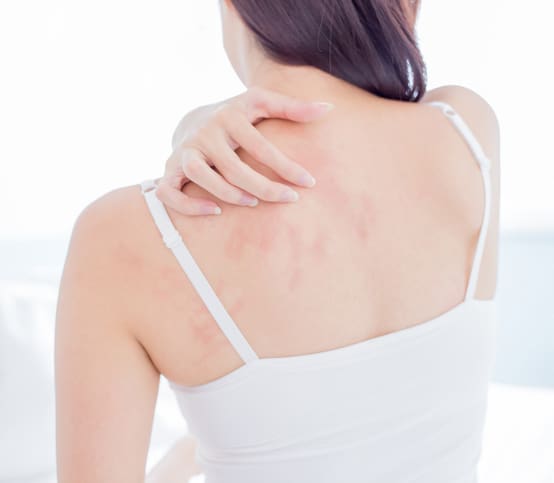 Eczema, also called atopic dermatitis, is associated with inflammation and a weakened skin barrier. The most noticeable symptom is often significant itching. For some people, the itch is worse at night and can interfere with sleep, work, school, or everyday activities.
Eczema may appear as:
- Dry, rough, or flaky skin
- Inflamed patches with less sharply defined edges
- Small raised bumps
- Cracked skin
- Oozing or crusting during an active flare
- Thickened or leathery skin after repeated scratching
- Color changes that may appear red, brown, purple, gray, or darker than the surrounding skin
The appearance can vary across different skin tones. In some people, inflammation may be less visibly red and may instead look brown, purple, gray, or darker than usual.
Eczema commonly affects areas where skin bends, such as the inner elbows and backs of the knees. It may also involve the hands, wrists, neck, face, ankles, or feet. Children may develop eczema in patterns that differ from those seen in adults.
The “itch-scratch cycle” can make eczema especially difficult to manage. Scratching may temporarily feel relieving, but it can further damage the skin barrier and increase irritation. Broken skin may also be more vulnerable to infection.
What does psoriasis usually look and feel like?
Psoriasis is a chronic inflammatory condition involving the immune system. In plaque psoriasis, the most common form, skin cells build up more quickly than usual. This can create thick, raised plaques with clearly visible borders.
Psoriasis may appear as:
- Raised, well-defined patches
- Dry white, silver, or gray scale
- Pink, red, brown, purple, or violet areas depending on skin tone
- Cracking or bleeding when the skin becomes very dry
- Itching, burning, stinging, or soreness
Psoriasis often develops on the outer surfaces of the elbows and knees, the scalp, shins, or lower back. It can also affect the belly button, skin folds, palms, soles, or genital area.
Nail changes can offer an important clue. Psoriasis may cause tiny depressions called nail pits, thickening, discoloration, ridging, or separation of the nail from the nail bed. Some people with psoriasis also experience joint pain, stiffness, swelling, or tenderness. These symptoms may be associated with psoriatic arthritis and should be discussed with a medical professional.
The National Institute of Arthritis and Musculoskeletal and Skin Diseases’ psoriasis overview provides additional information about psoriasis symptoms and evaluation.
Common triggers and influences
Eczema and psoriasis do not have exactly the same triggers, although stress and environmental changes can affect both.
Eczema influences
Eczema flares may be associated with:
- Fragranced soaps, lotions, detergents, or skincare products
- Rough fabrics such as wool
- Household dust, pollen, pet dander, or other allergens
- Hot water and long showers
- Dry air
- Sweating and heat
- Stress or changes in sleep
- Irritation from frequent handwashing or sanitizing
The skin environment in Arizona can present additional challenges. Phoenix, Scottsdale, Surprise, Buckeye, and nearby communities experience very dry air for much of the year, along with periods of intense heat. Low humidity can increase moisture loss from the skin, while sweating, air conditioning, and frequent changes between indoor and outdoor temperatures may irritate sensitive skin.
Seasonal changes may also matter. Some people notice more symptoms during periods of increased pollen or when the weather becomes especially hot and dry. Others may flare when indoor air becomes dry or when they change their skincare routine.
Psoriasis influences
Psoriasis flares may be associated with:
- Stress
- Certain infections, including some throat infections
- Skin injury, cuts, burns, or repeated scratching
- Smoking or excess alcohol use
- Certain medications
- Dry, cracked skin
- Changes in weather
Arizona’s strong sun exposure deserves special consideration. Some people with psoriasis may notice improvement with carefully managed medical phototherapy, but intentional or uncontrolled sun exposure is not a substitute for treatment. Sunburn can injure the skin and may worsen psoriasis in some individuals. Daily sun protection remains important.
Why self-diagnosis can be difficult
Eczema and psoriasis can overlap in several ways. Both may cause dry, itchy, inflamed, scaly skin. Both may flare and improve over time. Both can appear on the hands, scalp, face, or skin folds. In addition, treatment applied before an appointment may temporarily change the appearance of a rash, making evaluation more difficult.
Other conditions can also resemble eczema or psoriasis, including:
- Allergic or irritant contact dermatitis
- Seborrheic dermatitis
- Ringworm and other fungal infections
- Hives
- Insect bites
- Medication reactions
- Bacterial or viral infections
- Lichen planus or other inflammatory skin conditions
A rash that appears after using a new product may be contact dermatitis rather than eczema. A circular, spreading patch may suggest a fungal infection. A painful, blistering rash may require prompt evaluation for another cause. This is why it is not always appropriate to assume that every itchy or scaly patch is eczema or psoriasis.

When should you see a dermatologist?
Consider scheduling an appointment if:
- You have a new rash and are unsure what caused it
- Itching is severe or disrupting your sleep
- The rash is spreading, persistent, painful, or frequently recurring
- Skin is cracking, bleeding, oozing, or developing yellow crust
- You notice nail pitting, nail thickening, or unexplained nail changes
- You have joint pain, stiffness, or swelling along with a psoriasis-like rash
- Symptoms affect your face, hands, scalp, genitals, or a large portion of your body
- Over-the-counter products have not helped
- You are using steroid creams repeatedly without professional guidance
Seek prompt medical attention for a rash accompanied by fever, rapidly increasing pain, facial swelling, significant blistering, or signs of a serious allergic reaction.
How a dermatologist evaluates eczema and psoriasis
A dermatologist typically considers the rash’s appearance, texture, location, duration, and pattern. Your provider may also ask about family history, allergies, new products, medications, recent illnesses, stress, and environmental changes.
During an examination, the dermatologist may check the skin, scalp, and nails. If joint symptoms are present, you may be advised to discuss them with your primary care provider or another specialist. A skin biopsy is not always necessary, but it may be considered when the diagnosis is uncertain or another condition needs to be ruled out.
Treatment is individualized. Eczema care may focus on repairing the skin barrier, reducing inflammation, identifying irritants, and controlling the itch-scratch cycle. Psoriasis care may include topical medications, phototherapy, or systemic treatment depending on the severity, location, and impact on daily life. The right approach depends on the diagnosis and your overall health: not simply on how a rash looks in a photograph.
Compassionate dermatology care in the Greater Phoenix area
Living with an itchy, uncomfortable, or recurring rash can affect confidence and quality of life. At Arizona Skin Institute, Dr. Jay G. Mehta and the medical dermatology team take a careful, personalized approach to diagnosing and treating skin conditions across the Greater Phoenix area.
Whether you live in Phoenix, Scottsdale, Surprise, Buckeye, or a nearby community, professional evaluation can help clarify what is happening and what steps may be appropriate. You can also review Arizona Skin Institute’s resources on eczema, psoriasis, and rashes.
For general sensitive-skin care, using lukewarm water, choosing fragrance-free products, and applying a moisturizer consistently may help support the skin barrier. However, these measures do not replace an evaluation when symptoms are severe, persistent, or unclear. Arizona Skin Institute’s guide to a skincare routine for sensitive skin offers additional everyday tips.
Medical disclaimer: This article is for general educational purposes only and is not a diagnosis or substitute for medical advice. Eczema, psoriasis, and other rashes can look alike, and treatment should be recommended by a qualified healthcare professional after evaluating your symptoms and medical history.
Morpheus8 – The Key to Youthful and Firm Skin
As the years go by, our skin inevitably begins to show signs of aging, such as fine lines, wrinkles, and sagging. While the aging process is a natural part of life, advancements in medical...
SkinPen Microneedling for Vibrant and Youthful Skin
In the quest for vibrant and youthful skin, there are countless treatments and procedures available. One highly effective and increasingly popular option is SkinPen, a state-of-the-art microneedling...
The All-in-One Laser-Based Liposuction Revolution
In recent years, cosmetic procedures have witnessed remarkable advancements. Among these groundbreaking innovations is BeautiFill, an all-in-one laser-based liposuction technique that has...

Cryotherapy FAQs: Will Freezing Skin Cancer Cells Kill Them?
Cryotherapy, also called cryoablation or cryosurgery, is a treatment involving freezing temperatures. This minimally-invasive technique can address various conditions, including precancerous or...
Common Springtime Skin Allergies and Treatments
Spring brings more than windflowers and birdsong. For those who suffer from springtime skin allergies, the sudden influx of pollen, spores, and other allergens in the air may cause hives and rashes...
Med Spa Services, Treatments & Overview
We offer a wide range of services and treatments designed to enhance and rejuvenate the body, face, and overall well-being. From advanced skincare treatments to non-surgical cosmetic procedures, our...

FAQs About Precancerous Skin: Types, Signs, and More
Sitting by the pool, hiking up a mountain, or just tanning in our backyards – we Americans take having "fun in the sun" to a whole new level. Ironically, our love and appreciation for the sunny...
Schedule An Appointment
Surprise
Buckeye
