
Finding a new lump under your skin can be unsettling, especially when you’re not sure what it is. One common possibility is a skin cyst: a small, sac-like bump that often grows slowly and is usually benign. Still, not every lump is a cyst, so it’s best to have a dermatologist check a new or changing bump rather than trying to identify it on your own.
Here’s a friendly guide to what skin cysts can look and feel like, why they may form, and when to seek care.
What is a Skin Cyst?
A skin cyst is a closed pocket beneath or within the skin. Depending on the type, it may contain keratin, a protein found in skin and hair, or other material. Cysts can appear on many areas of the body and vary in size. Many are painless and cause no problems, while others may become irritated, inflamed, or tender.
Most skin cysts are noncancerous. However, other kinds of skin growths can sometimes look similar. That’s why a dermatologist should evaluate a new lump, especially if it changes or you’re unsure what it is.
Common Types of Skin Cysts
Epidermoid Cysts
Epidermoid cysts are among the most common skin cysts. They often appear on the face, neck, or trunk, but they can form in other places too. They may feel like a smooth, round lump beneath the skin and can sometimes have a small, dark opening in the center, called a punctum.
These cysts generally grow slowly. Many remain comfortable and unchanged for a long time, though one may become irritated or inflamed.
Pilar Cysts
Pilar cysts most often develop on the scalp and form from structures associated with hair follicles. They may feel like firm, smooth bumps beneath the skin and often do not have the central opening that can occur with an epidermoid cyst. A tendency to develop pilar cysts can sometimes run in families.
“Sebaceous Cysts”
People commonly use the term “sebaceous cyst” to describe a bump they believe is a cyst. In many cases, they may be referring to an epidermoid cyst. The name can be misleading, since these cysts are not necessarily formed from an oil gland. A dermatologist can help determine what kind of growth you have.
Why do Skin Cysts Form?
The cause depends on the type of cyst. Some develop when skin cells or keratin become trapped beneath the skin, sometimes around a hair follicle. A blocked follicle or duct, or a small injury to the skin, may play a role. Some kinds, including pilar cysts, may have a genetic tendency.
Often, there isn’t one clear reason a particular cyst appeared. Having a cyst does not mean you did anything wrong, and it’s understandable to have questions about a bump that’s new to you.
What Can a Cyst Look or Feel Like?
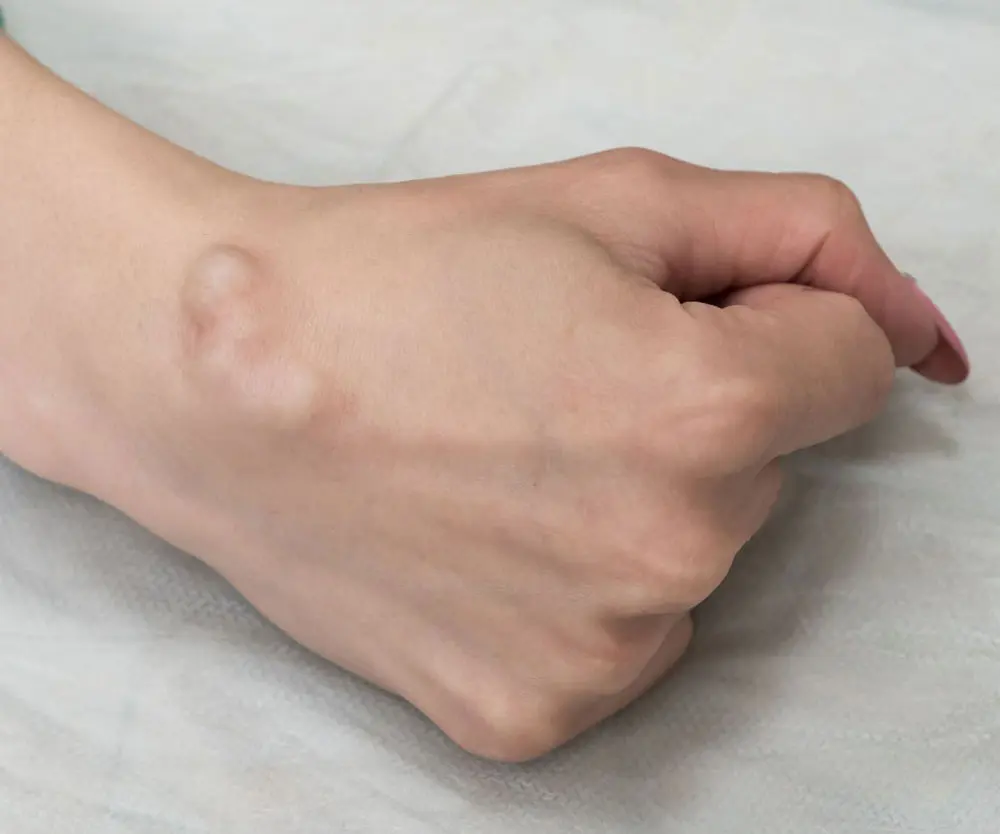
A cyst may appear as a smooth, rounded lump under the skin. It may be skin-colored or slightly different in color, and some cysts have a tiny dark spot at the center. Many are slow-growing and don’t hurt.
Sometimes a cyst becomes inflamed, irritated, or infected. It may then feel tender or painful and look red or feel warm. It can also swell or drain. A cyst that ruptures beneath the skin may become inflamed, but redness and swelling do not automatically confirm a bacterial infection. A dermatologist can assess what’s going on and recommend appropriate care.
What NOT to Do at Home
If you’ve found a bump, it can be tempting to squeeze it or try to drain it yourself. Resist that urge. Squeezing, cutting, or puncturing a cyst at home can irritate the surrounding skin and may increase the risk of infection, scarring, or recurrence.
Even if some material comes out, the cyst’s sac may remain beneath the skin. The bump may return, and the area can become more inflamed. If a cyst is bothering you, ask a dermatologist about safe options rather than using needles, tools, or DIY treatments.
When Should You See a Dermatologist?
It’s a good idea to have a dermatologist evaluate any new lump that doesn’t go away or any bump you’re uncertain about. Since different skin growths can resemble one another, an in-person assessment is the safest way to understand what it may be.
Arrange an evaluation if a lump:
- Grows quickly or changes in appearance
- Becomes painful, red, or warm
- Starts draining
- Keeps getting irritated or returns
- Is in a sensitive area or interferes with daily activities
- Simply worries you or doesn’t seem like a typical bump
If you have a fever, severe pain, or redness that is spreading, seek prompt medical attention. These symptoms may need timely assessment.
How Are Skin Cysts Treated?
The right approach depends on the cyst’s appearance, location, symptoms, and whether the diagnosis is clear. Your dermatologist can discuss what makes sense for your situation.
- Observation: A small cyst that isn’t causing symptoms may not need treatment. Your dermatologist can advise whether to monitor it.
- Care for an inflamed cyst: Depending on the findings, a dermatologist may recommend an approach to ease symptoms. This may include draining an inflamed cyst or, in selected cases, an injection to reduce inflammation. The best option depends on the individual cyst.
- Surgical excision: Removing the cyst and its wall can offer a more definitive treatment. Simply draining the contents may not remove the sac, so the cyst can come back. If a cyst is very inflamed, a dermatologist may recommend waiting until the inflammation settles before considering removal.
No treatment can be promised to have the same result for everyone, and removal may leave a scar. Your dermatologist can explain potential benefits and risks before you decide. When a growth is removed, it may be sent for evaluation to confirm the diagnosis.
A New Lump is Worth Checking
It’s common to feel awkward asking about a bump, but dermatologists see skin concerns like this every day. Getting a lump checked is a practical way to understand what it is and discuss whether it needs treatment. Don’t assume it’s a cyst, or try to remove it yourself, when a professional assessment can provide clearer guidance.
Arizona Skin Institute provides care for cysts through its medical dermatology services. The team serves patients in Surprise, Scottsdale, Buckeye, and across the Greater Phoenix area. To request an appointment, visit the contact page.
This article is for general education and is not a diagnosis or a substitute for personalized medical advice. A dermatologist should evaluate a new or changing lump.
Morpheus8 – The Key to Youthful and Firm Skin
As the years go by, our skin inevitably begins to show signs of aging, such as fine lines, wrinkles, and sagging. While the aging process is a natural part of life, advancements in medical...
SkinPen Microneedling for Vibrant and Youthful Skin
In the quest for vibrant and youthful skin, there are countless treatments and procedures available. One highly effective and increasingly popular option is SkinPen, a state-of-the-art microneedling...
The All-in-One Laser-Based Liposuction Revolution
In recent years, cosmetic procedures have witnessed remarkable advancements. Among these groundbreaking innovations is BeautiFill, an all-in-one laser-based liposuction technique that has...

Cryotherapy FAQs: Will Freezing Skin Cancer Cells Kill Them?
Cryotherapy, also called cryoablation or cryosurgery, is a treatment involving freezing temperatures. This minimally-invasive technique can address various conditions, including precancerous or...

Common Springtime Skin Allergies and Treatments
Spring brings more than windflowers and birdsong. For those who suffer from springtime skin allergies, the sudden influx of pollen, spores, and other allergens in the air may cause hives and rashes...
Med Spa Services, Treatments & Overview
We offer a wide range of services and treatments designed to enhance and rejuvenate the body, face, and overall well-being. From advanced skincare treatments to non-surgical cosmetic procedures, our...

FAQs About Precancerous Skin: Types, Signs, and More
Sitting by the pool, hiking up a mountain, or just tanning in our backyards – we Americans take having "fun in the sun" to a whole new level. Ironically, our love and appreciation for the sunny...
Schedule An Appointment
Surprise
Buckeye
