
Nine Sneaky Places Skin Cancer May Hide
Skin cancer hiding in places you never thought to check may remain undetected for years. From the top of your head to the soles of your feet, Arizona Skin stresses the importance of checking everywhere for potential signs of skin cancer.
Where else should you look? Let’s discuss, beginning with the area most likely to bask in the sun’s rays.
1. Scalp
About 13% of all skin cancers develop on the scalp. If you spend a chunk of your time outdoors, whether you wear a hat or use an umbrella, inspect your scalp for signs of skin cancer. From the sudden emergence of a mole to a lump or sore that persists, have any new growth checked by a dermatologist. Nonmelanoma skin cancer has various faces; only a medical professional can determine whether something is benign or malignant.
2. Eyelid
According to the American Society of Clinical Oncology (ASCO), between 5% and 10% of all skin cancers affect the eyelid. About 85% to 95% of cases in non-Asian countries are non-melanoma basal cell cancer, and 70% develop in the lower eyelid.
In most cases, excessive and unprotected sun exposure is the cause of eyelid cancer. Similar to most non-melanomas, you have several treatment options for skin cancer removal, and early treatment is critical to preventing skin cancer progression and metastasis.
3. Colored Portion of the Eye (Iris)
Iris melanoma is the least common site for skin cancer of the eye tissue (uveal melanoma). The incidence rate is around 5%, affecting between 0.2 and 0.9 per million individuals.
If you suspect having uveal or intraocular melanoma, you will likely see a dark or brown blot in your iris. This blot may also overlap between your iris and pupil, and vision problems may arise as a result of the tumor growing. While skin cancer metastasis is rare, untreated iris melanoma can spread through the lymph nodes, reaching and affecting your liver, lungs, or brain, among other potential sites.
4. White of the Eye (Sclera)
The sclera is the white portion covering most of the eyeball’s exterior. Cancers affecting this site are known as conjunctival melanomas. They account for 2% of all tumors in the eye and about 0.25% of all melanomas. Aggressive by nature, they tend to invade nearby structures. As such, if you notice a pigmented and elevated lesion on your sclera, inform your doctor right away.
5. Inside or Outside the Ears
About 5 in every 100 skin cancers develop in or around the ear, with squamous cell carcinoma being the most common. Untreated, ear skin cancer can spread further inside the ear, affecting the ear canals, the auditory ossicles in your middle ear (malleus, incus, and stapes), as well as the hair-like nerves in your inner ear (stereocilia), all of which are necessary for hearing and balance. In rare cases, ear skin cancer can metastasize to the temporal bone encasing all of the above. Unaddressed, it can cause deafness, persistent dizziness, and facial paralysis.
6. Lips
Your lips’ delicate skin is vulnerable to cancer, particularly basal and squamous cell carcinoma. The lower lip is about 12 times more likely to develop cancer, according to a study published in the Archives of Craniofacial Surgery. Lip cancer lesions can resemble cold sores or fever blisters when they first appear. The difference is, cold sores typically resolve within 7 to 10 days, while skin cancer lesions on the lips will linger. If your “cold sore” persists for over two weeks, see a skin doctor.
7. Tongue
You may have squamous cell cancer if you notice flat, white, solid patches (leukoplakia) on your tongue, or tingling, loss of feeling, or a lesion that won’t heal. The risk of developing this disease (and other malignancies in or around the mouth) is higher in those who smoke cigarettes, drink excessive alcohol, or do both.
8. Beneath the Nails
Subungual melanoma can occur under your fingernails and toenails. The thumb and big toe are the most common sites, though it can affect any nail. Due to its hidden location, sun exposure is unlikely a leading cause. Instead, subungual melanoma may stem from previous nail injuries.
Only 0.07% to 3.5% of all melanoma patients have this malignancy. Men and women over 50, individuals with darker skin colors, and anyone with a history of melanoma have a higher risk of developing this rare condition.
When checking your nails for skin cancer, Arizona Skin recommends looking for the following:
- A dark streak, which may look like a black or brown band in your nail
- Dark skin around your nail
- Nail splitting
- Nail lifting or separating from your fingers or toes
- A bump or nodule under your nail
If you notice one or more of these signs and symptoms, book your skin cancer screening with Arizona Skin today.
9. Palms and Soles
If you have darker skin, melanoma may lurk in areas hidden from the sun, such as the palms of your hands and soles of your feet. Known as acral lentiginous melanoma, this rare form of skin cancer is more common in people with darker skin colors, as it only affects 2% of light-skinned individuals. A flat dark patch (sometimes reddish or orange) distinct from the skin around it can be a sign of acral lentiginous melanoma.
A Reminder to Check Your Skin for Cancer Once a Month
When diagnosed and treated early, most skin cancers are curable.
Inspect your skin monthly, especially if you spend a lot of time outdoors or have a family history of melanoma, squamous cell cancer, or basal cell carcinoma. Stand in front of a mirror or use a handheld alternative to look for signs of cancer in all areas of your body. For more difficult-to-examine places such as your scalp, take your time to feel for unusual bumps, or seek help from someone you’re comfortable with.
If you notice new growths or see changes in old spots, we encourage you to contact us and schedule your skin cancer screening. You can also self-schedule below. Don’t hesitate to reach out today to take a proactive step toward your well-being.

Botox vs. Daxxify: Which Is Better for Your Wrinkles?
If you’re thinking about smoothing expression lines before holiday gatherings, you may be weighing Botox against Daxxify. Both are injectable neuromodulators that temporarily relax targeted muscles,...
Skin Cysts 101: What That Lump Under Your Skin Really Means
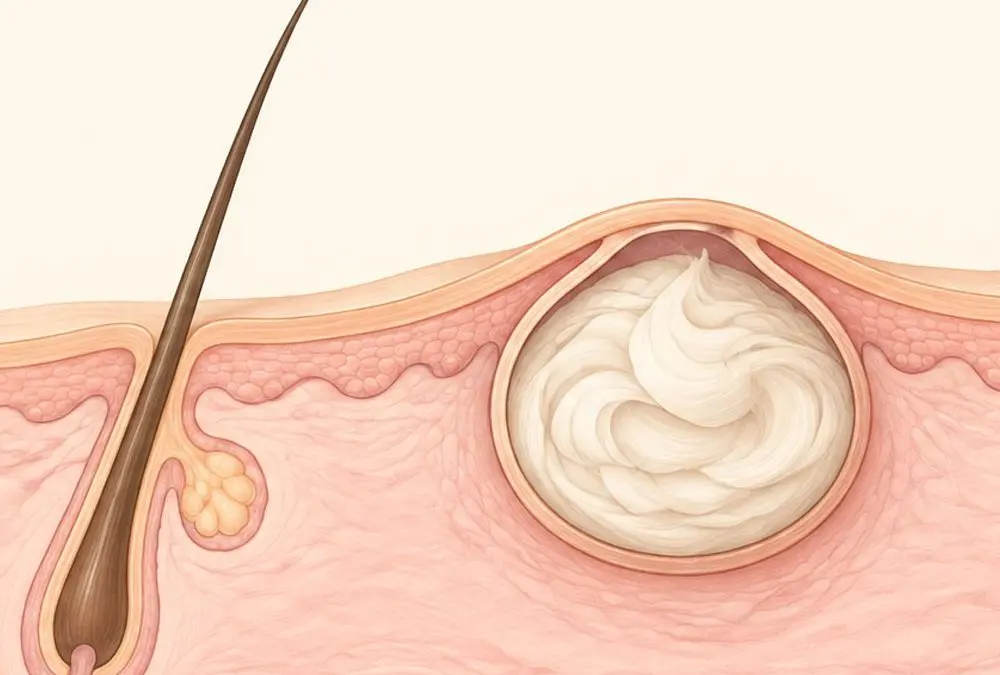
Finding a new lump under your skin can be unsettling, especially when you’re not sure what it is. One common possibility is a skin cyst: a small, sac-like bump that often grows slowly and is usually...

Pre-Holiday Glow Up: When to Book Your Treatments
The holiday calendar has a way of filling up quickly. If you’re hoping to refresh your skin before Thanksgiving, a December gathering, or New Year’s celebrations, October and November are smart...

Fall Skin Reset & 5 Steps to Repair Summer Sun Damage
Late September brings a welcome shift to the Greater Phoenix area. The days are beginning to cool, outdoor plans feel more comfortable, and the UV index is gradually moving down from its summer...

Dry Skin vs. Dehydrated Skin: Which One Do You Have?
If your skin feels tight, rough, flaky, or dull, you may assume you have dry skin. But there is another possibility: your skin may be dehydrated. Although the terms are often used interchangeably,...

Retinol in Fall: Why Now Is the Best Time to Start
If you have been thinking about starting retinol, or restarting a retinoid routine after a long Arizona summer, fall can be an excellent time to begin. The UV index and sun intensity generally start...

Eczema or Psoriasis? How to Tell the Difference
A new itchy or scaly patch can be frustrating: and it is not always easy to tell what is causing it. Two common possibilities are eczema and psoriasis, chronic inflammatory skin conditions that can...
Schedule An Appointment
Surprise
Buckeye
